 Partners
 Log out

What if your infrared dryer could see?
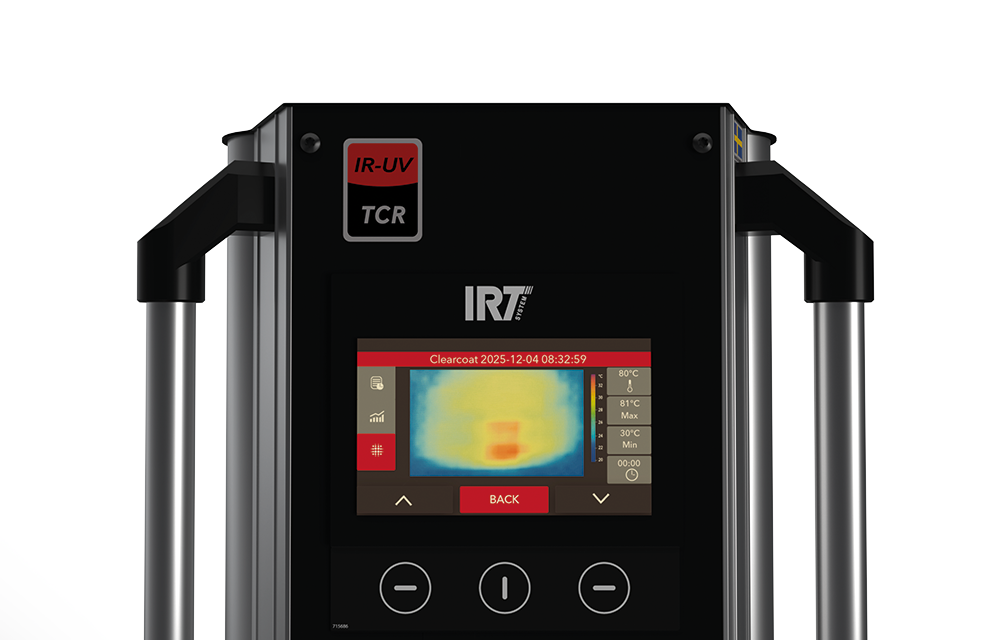
How thermal vision enables controlled infrared curing
What does it mean that our dryer can ‘see’?
TCR does not see colour, shape or detail like a person. It sees heat. The thermal camera measures hundreds of temperatures across the repair surface at the same time and turns them into a live map of how the panel is responding to infrared energy.
This is fundamentally different from knowing only the elapsed time or the temperature at one point. A single value can say that the target has been reached while a hotter area is already at risk of overheating—or while a colder area still needs more energy.
The whole process depends on the temperature field
Curing time is influenced by the coldest part of the treated area, while the hottest part limits the safe maximum temperature. Until the dryer can see both, control is based on an incomplete picture. Thermal vision gives the controller the missing information: where heat is building, where it is lagging and how the surface changes throughout the cycle.
The dryer responds to the panel—not to assumptions
Once the surface becomes visible to the control system, the process can react to real conditions instead of relying only on presets, time and operator judgement.
Uniform curing becomes controllable
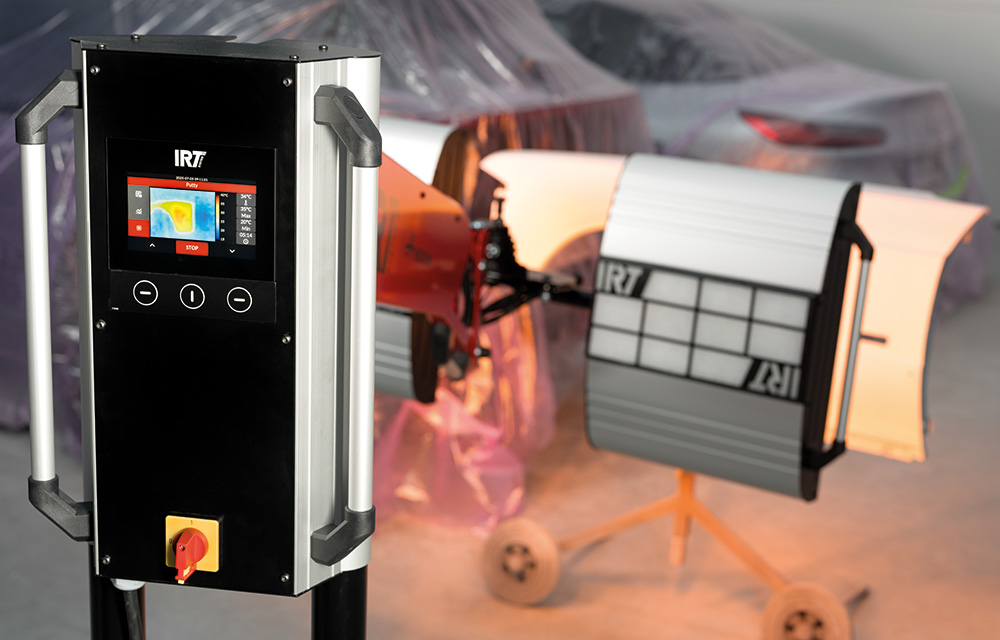
A temperature field reveals variation across the repair area. Continuous feedback allows the controller to keep the curing profile on track, supporting more consistent results and reducing the risk of uneven curing.
Overheating can be prevented—not just discovered
Because the hottest areas are monitored throughout the cycle, the system can adjust the energy input as conditions change. The critical difference is timing: the dryer responds during the process, before excess heat becomes a finished-result problem.
Energy follows the surface
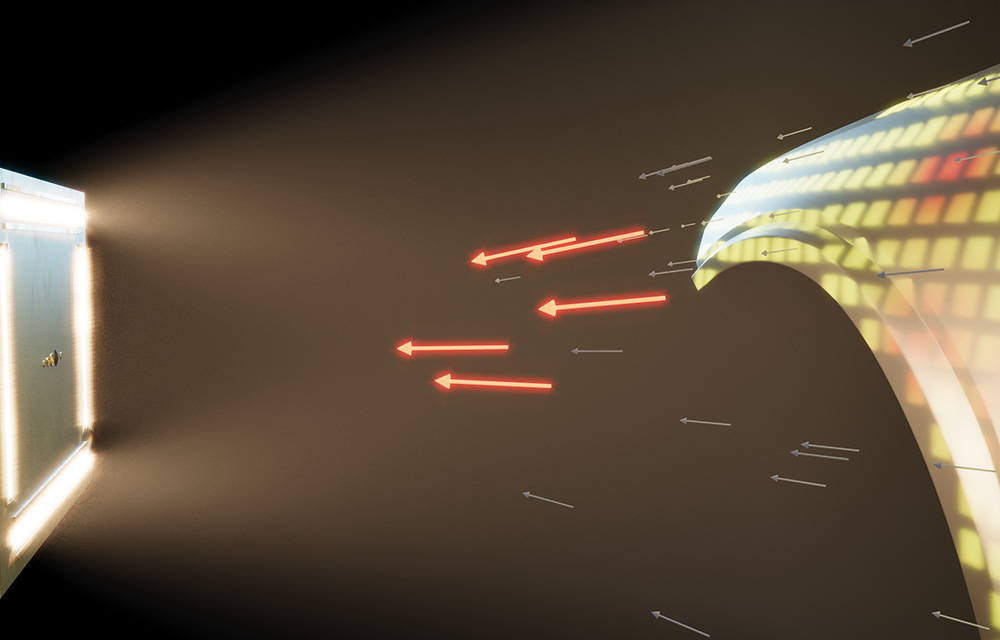
The controller delivers only the power needed to reach the target temperature. When the surface approaches the selected profile, output can be reduced rather than continuing at an unnecessarily high level.
The dryer remembers what it saw
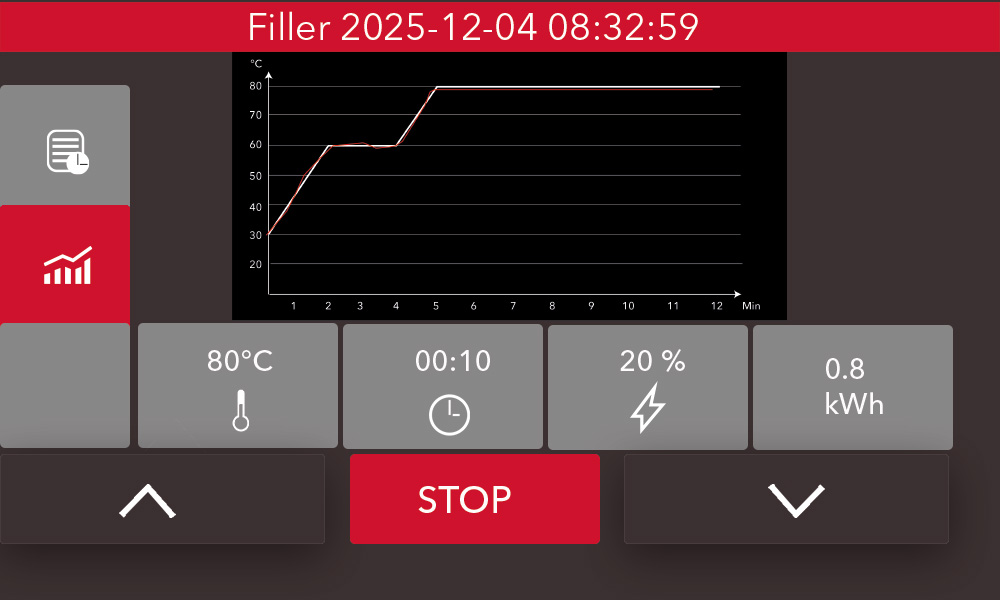
During curing, the process can be viewed as parameters, a diagram or a thermal image. Afterwards, the operating history can retain that thermal image and curve together with the target temperature based on the five hottest pixels, maximum and minimum temperature, end distance, cassette count and total energy consumption. Each cycle gains a process memory.
The operator is still in control
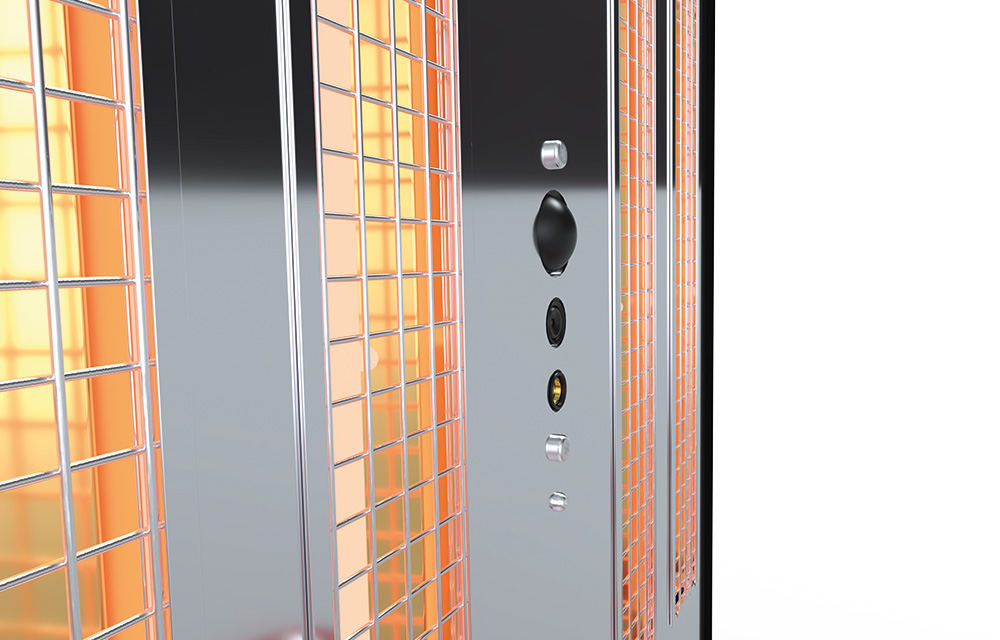
TCR does not remove professional judgement. The operator selects the appropriate process and positions the equipment. Thermal vision then handles the continuous task no person can perform unaided: monitoring hundreds of temperature points and correcting the energy input throughout the cycle.
-
Necessary
These cookies are not optional. They are needed for the website to function. -
Statistics
In order for us to improve the website's functionality and structure, based on how the website is used. -
Experience
In order for our website to perform as well as possible during your visit. If you refuse these cookies, some functionality will disappear from the website. -
Marketing
By sharing your interests and behavior as you visit our site, you increase the chance of seeing personalized content and offers.