 Partners
 Log out
Drester Wheel washers – GP24
How does the Drester GP24 Le Mans wheel washer work?
The GP24 wheel washer is an automated system for efficient professional wheel cleaning.
Wheels are loaded onto trolleys and automatically fed into the machine, where they are securely positioned and rotated during the washing cycle.
The cleaning process combines water jets with mechanical action and plastic media (plastic beads), which remove stubborn brake dust, road grime, and other contaminants from all surfaces of the wheel.
What is the trolley system?
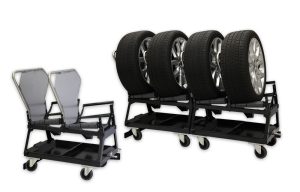
The trolley system used for Drester GP24 Le Mans wheel washer is an automated loading and transport solution that allows wheels to be easily placed into the machine and securely positioned during the washing cycle.
This system reduces manual lifting, making the workshop environment more ergonomic. It also improves efficiency. Multiple trolleys can be prepared and queued one after another, allowing operators to load new sets of wheels while another batch is being cleaned.
What type of businesses is this wheel washer best suited for?
The Drester GP24 Le Mans wheel washer is best suited for workshops and businesses with regular wheel cleaning needs, such as automotive repair shops, tire service shops, car dealerships, and fleet maintenance operations.
It is designed for professional use. Perfect for companies where efficiency, environmental compliance, and consistent cleaning results are important.
How long is one cleaning cycle?
The standard cleaning cycles vary from 30-60 sec, with possibilities to use prolonged cleaning programs for very dirty and complex rims.
Is compressed air required for the Dretser GP24 Le Mans wheel washer?
Yes. The compressed air is used to support key machine functions, such as wheel handling and parts of the automated washing cycle.
Can it clean large SUV wheels?
Yes. The Drester GP24 Le Mans wheel washer washes alloy and SUV wheels with a max diameter of 800mm, using the dynamic flush pipe technology.
Can all wheel types be washed in the Drester GP24 Le Mans wheel washer?
Wheels with rim surfaces protruding more than 13 mm (1/2”) beyond the tyre sidewall should not be washed in the GP24, as the protruding parts of the rim may be damaged during the washing process.
This mainly applies to certain custommade wheels, deep concave rims and some special alloy wheel designs.
Can you clean a flat tire in the Drester GP24 Le Mans wheel washer?
No. A flat tire cannot be cleaned in the machine as it will not rotate properly.
Can wheels equipped with TPMS (Tire Pressure Monitoring System) be safely cleaned in the Drester GP24 Le Mans wheel washer?
Yes. The washing process itself is compatible with TPMS-equipped wheels. Make sure to handle the wheels properly to avoid mechanical damage to the sensors.
Can you use customized wash cycles?
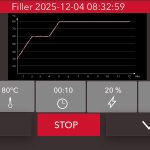
Yes. The wash programs in the Drester GP24 Le Mans wheel washer are editable – meaning that you can adjust – times of wash, Clean Rinse and air blow time.
What is the Clean Rinse function?
The Clean Rinse function is designed to give the wheel a final rinse with clean water after the main washing cycle. It consumes around 0,3 litres per wheel.
How often should the water in the machine be changed?
The water in the Drester GP24 Le Mans wheel washer should be changed every 300 wash cycles. If the Clean Rinse function is being used in the machine, the water change intervals may be increased to approximately 400-500 washes.
Does this wheel washer recycle water?
The Drester GP24 Le Mans wheel washer can be equipped with an optional water treatment and filtration system that enables water recycling. The system separates dirt and contaminants from the wastewater.
It’s not recommended to recycle the cleaned water as the ph value will eventually be affected.
How should wastewater from the machine be handled?
The wastewater from Drester GP24 Le Mans wheel washer contains dirt from roads and vehicles, which may include heavy metal residuals.
Wastewater should normally be discharged through an oil separator.
If needed, the machine can be fitted with Hedson’s environmentally friendly water cleaning and filtering system that separates contaminants from the water, allowing the treated water to be safely discharged into the drain. This can be made manually in the machine or automatically by using the Drester Filter eQ.
When using the Hedson water cleaning system, the wastewater meets applicable water authority requirements. Local regulations may vary, so users should consult their local water authority for specific discharge limits.
Read more about the water cleaning system here
https://www.hedson.com/wp-content/uploads/2018/05/Watercleaning_EN_rev.1_LR.pdf
How does the intelligent water heating system in the Drester GP24 Le Mans wheel washer work?
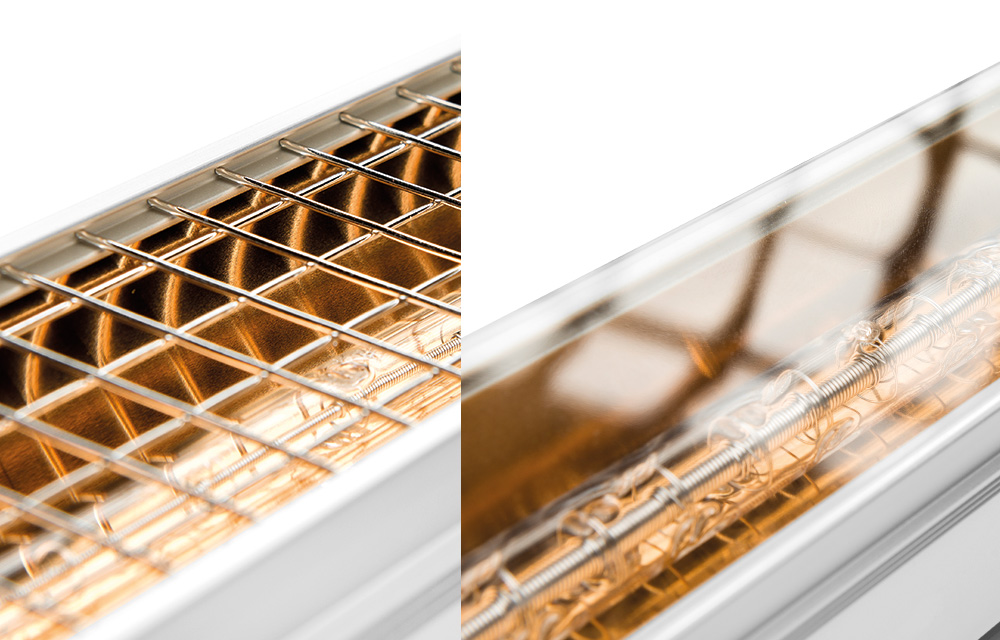
It optimizes energy usage by automatically managing heating based on the workshop’s operating schedule.
Users can set the time when the machine should be ready for operation in the morning, when it is no longer in use in the afternoon, and which weekdays the schedule applies to. The system then automatically starts heating the water in advance so that it reaches the desired operating temperature at the selected start time.
This intelligent heating function can save up to 50 percent more energy compared to a traditional thermostat-controlled heater.
By default, the machine is set to operate from 07:00 to 16:00, Monday to Friday, ensuring the water is maintained at operating temperature during working hours.
If continuous heating is preferred, the schedule can be set from 00:00 to 00:00, Monday to Sunday, which keeps the water heated 24/7.
How energy efficient is the Drester GP24 Le Mans wheel washer?
This wheel washer is designed with energy efficiency in mind. It features an intelligent water heating system that can reduce energy consumption by up to 50 percent compared to traditional thermostat-controlled heaters.
The machine also supports programmable scheduling. This helps minimize unnecessary energy use while ensuring the machine is ready when needed.
How does the Drester GP24 Le Mans monitor energy consumption?
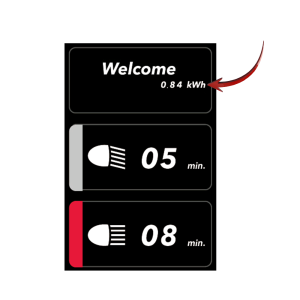
The Drester GP24 Le Mans wheel washer is equipped with an advanced current monitoring system that measures the pump motor’s energy consumption during operation.
The machine displays the average energy consumption per wash cycle, giving workshops better insight into operational efficiency and machine performance.
The statistics are automatically reset each time the machine is cleaned.
What happens when the plastic beads in the wheel washer are worn out?
The DoublePower granulate (shot medium) mixture of plastic beads that are used to clean the wheels in the Drester GP24 Le Mans wheel washer can be ordered using the number 230794 (bag containing 20 kg).
When changing the water after appr. 3-500 washed wheels, the granulate is gathered in a metal basket. If necessary, some additional granulate is added.
In an empty Wheel washer 20 kg of Drester Doublepower granulate (Shot medium) is needed.
Drester Dynamic Triple Solvent Recycling System
What is the Drester Dynamic Triple system?
The Drester Dynamic Triple is a closed solvent recycling system developed for automotive body and paint shops. It combines a Drester solvent recycler, an RDX docking unit and a Drester solvent spray gun cleaner into one integrated system that minimizes solvent handling, reduces waste and lowers operating costs.
What is a closed solvent handling system?
A closed solvent handling system transfers contaminated and recycled solvent between equipment without operators pouring or carrying solvent manually. This reduces exposure to solvent fumes, minimizes spills and improves workshop safety.
Who is Dynamic Triple designed for?
Dynamic Triple is designed for professional automotive body shops, collision repair centres, commercial vehicle paint facilities and industrial paint operations that use solvent-based spray guns.
How does solvent recycling work?
Used cleaning solvent from the spray gun cleaner is transferred to the Drester 120 solvent recycler. During recycling, clean solvent is distilled from paint residues and returned for reuse. Approximately 95% of the solvent can be recovered.
How much solvent can be recovered?
The Drester 120 solvent recycler can recover approximately 95% of the used solvent, significantly reducing purchases of new solvent.
Why recycle cleaning solvent?
Recycling solvent helps:
- Reduce solvent purchases
- Lower hazardous waste disposal costs
- Reduce environmental impact
- Improve workshop sustainability
- Improve profitability
Is solvent recycling environmentally friendly?
Yes. Recycling dramatically reduces hazardous waste while minimizing the amount of new solvent required for daily operations.
How much money can solvent recycling save?
Every litre of solvent that is recycled avoids both the purchase of new solvent and the disposal cost of contaminated solvent.
What is the return on investment (ROI) for Dynamic Triple?
Using the example provided in the white paper, a typical body shop can achieve payback in approximately 32 months for the complete Dynamic Triple system, depending on solvent usage and local disposal costs.
Why is solvent disposal expensive?
Disposal of contaminated paint solvent typically costs more than purchasing fresh solvent because hazardous waste requires approved handling and processing.
Can Dynamic Triple be connected to existing Drester spray gun cleaners?
Yes. The system is designed to connect to Drester solvent and Combo spray gun cleaners, making upgrades straightforward for existing users.
Does cleaner solvent improve spray gun cleaning?
Yes. Cleaner solvent reduces contamination inside the spray gun cleaner, helping extend its service life.
How does Dynamic Triple improve workshop safety?
The system minimizes manual solvent handling, reducing exposure to harmful solvent vapours, heavy lifting and accidental spills.
Does Dynamic Triple reduce exposure to solvent fumes?
Yes. Because solvent remains inside a closed system throughout recycling and transfer, staff have significantly less exposure to solvent vapours.
Why is minimizing manual solvent handling important?
Manual handling increases the risk of:
- Chemical exposure
- Spills
- Fire hazards
- Worker injuries
- Environmental contamination
A closed system helps reduce all of these risks.
How far can the recycler be placed from the spray gun cleaner?
The Drester RDX docking unit allows solvent transfer over distances of up to 25 metres, giving workshops greater flexibility when planning layouts.
Can the solvent recycler be installed in another room?
Yes. Subject to local fire regulations, the recycler may be installed separately from the spray gun cleaner, improving safety and workshop layout flexibility.
How much maintenance does Dynamic Triple require?
Routine maintenance consists mainly of:
- General cleaning
- Condenser coil inspection
- Occasional lid gasket replacement
With proper maintenance, systems can remain operational for more than ten years.
What is the expected service life?
Typical service life is 7–10 years, although many systems remain in operation well beyond this with proper maintenance.
How does Dynamic Triple reduce hazardous waste?
By recovering usable solvent rather than disposing of it after a single cleaning cycle, hazardous solvent waste is significantly reduced.
How does solvent recycling contribute to sustainability?
Solvent recycling supports sustainability by:
- Reducing chemical waste
- Conserving raw materials
- Lowering transport associated with solvent deliveries and waste disposal
- Reducing overall environmental impact
Drester GP Filter eQ
What is Drester GP Filter eQ?
Drester GP Filter eQ is a fully automatic water purification and filtration system. It is designed for use with Drester GP and W-750 wheel washers. This filter continuously purifies the washing water, helping workshops reduce water changes, maintenance and downtime.
How does Drester GP Filter eQ work?
The dirty water produced in the wheel washer is automatically suctioned into the GP Filter eQ. The water is then going through a chemical flocculation process, that separates contaminants before the water passes through a filter.
This filter captures heavy metals, plastic particles, fibres and other residues and the purified water is then led or pumped to a drain or container.
Which wheel washers is GP Filter eQ compatible with?
GP Filter eQ is designed to work with Drester GP10, GP12, GP24 and W-750 wheel washers equipped with a clean rinse function.
How many wheels can I wash before changing the water?
Up to approximately 5.000 wheels can be washed before the wheel washer water needs to be changed – all depending on how dirty the wheels are.
How much water does the system use?
The water consumption per washed wheel is approximately 1–1,5 litres. This helps workshops use less water.
How far from the wheel washer can the filter unit be installed?
The GP Filter eQ can be installed up to 10 metres from the connected wheel washer. An extension kit is required when the distance is between 5 and 10 metres.
Does the system require manual operation?
This is a fully automatic and integrated water purification system. The GP Filter eQ is integrated with the wheel washer software to provide a simple and reliable purification process. The goal is minimal interruption for workshop operations.
What happens to the contaminants?
The waste separated by the GP Filter eQ is collected in a filter bag, which can be easily removed and replaced. Used filter bags contain environmentally hazardous waste and must be disposed of according to locally applicable regulations.
How often do you have to change the filter bag?
The frequency depends on how many wheels are washed and how contaminated the washing water is. The filter bag should be checked and managed according to the maintenance instructions.
Can the purified water be discharged into a drain?
The purified water can be led or pumped to a drain or collected in a container – this all depends on local regulations for wastewater. Make sure you follow this.
Does GP Filter eQ reduce workshop downtime?
Yes. By automatically purifying the washing water, GP Filter eQ reduces the need for frequent water changes and manual water handling. This helps keep the wheel washing process running with fewer interruptions.
What maintenance does the system require?
GP Filter eQ is designed to simplify maintenance, but the filter bag must be replaced when required and accumulated dirt inside the wheel washer must still be removed manually. Regular maintenance should always be carried out according to the product manual.
Is flocculation powder required?
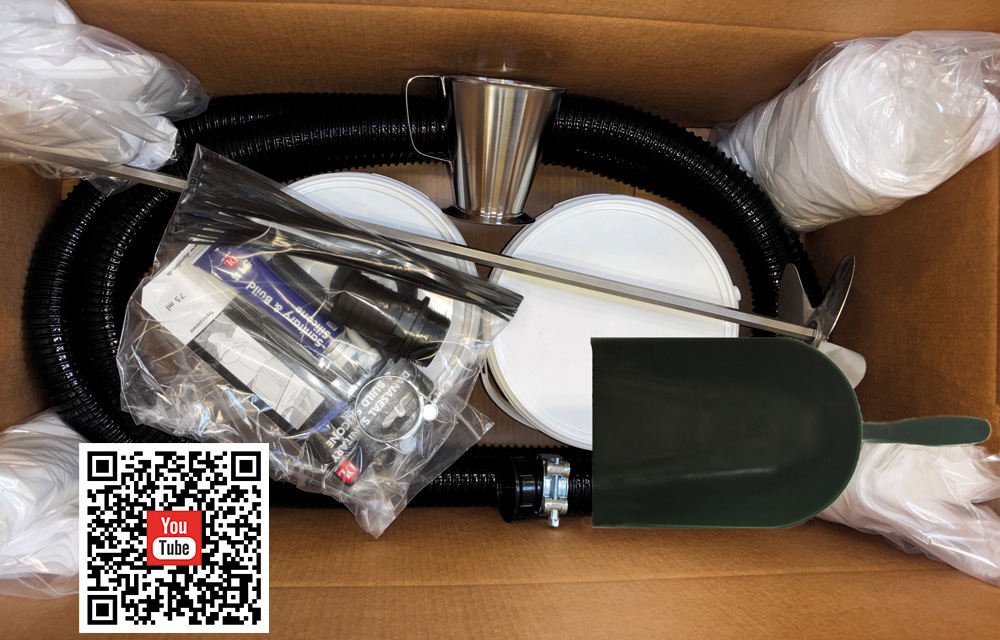
Yes. GP Filter eQ must be used with the specified flocculation powder and filter bags. Both are specially designed for the system and are included with the machine on delivery. Using the system without them can result in polluted wastewater being discharged and may cause flooding inside the machine.
How does GP Filter eQ benefit the environment?
The system helps reduce 1. water consumption and 2. improves the handling of contaminated washing water by separating heavy metals, plastic particles, fibres and other residues before discharge or collection. It also reduces the need for frequent water changes.
Who is GP Filter eQ suitable for?
It is particularly suitable for any automotive business that washes wheels regularly and wants a more efficient and less interrupted workflow. For example workshops, tire shops, dealerships, fleet operators and wheel refurbishment businesses.
Company
What kind of company is Hedson?
What types of products does Hedson develop?
What makes Hedson’s solutions unique compared to competitors?
Does Hedson work directly with customers or only through distributors?
What is Hedson’s commitment to sustainability?
How long has Hedson been in business?
Our Brands & Solutions
What brands are part of the Hedson Group?
TBA
Industries We Serve
Which industries does Hedson provide solutions for?
Sustainability & Quality
How does Hedson ensure high product quality?


-
Necessary
These cookies are not optional. They are needed for the website to function. -
Statistics
In order for us to improve the website's functionality and structure, based on how the website is used. -
Experience
In order for our website to perform as well as possible during your visit. If you refuse these cookies, some functionality will disappear from the website. -
Marketing
By sharing your interests and behavior as you visit our site, you increase the chance of seeing personalized content and offers.